I. Personnel Arrangements
For international travelers visiting Beijing and Xi'an, it is highly recommended to hire a professional bilingual tour guide. These guides are proficient in both English and Chinese, ensuring seamless communication. They can not only provide detailed explanations of historical and cultural attractions but also assist with various aspects of the trip, such as transportation, accommodation, and dining arrangements. In addition, if you prefer a more personalized experience, you can consider private tour services, which can be customized according to your specific interests and travel pace.
II. Route Arrangements
Day 1: Arrival in Beijing
•Morning: Upon arrival at Beijing Capital International Airport, our professional tour guide will pick you up and transfer you to the hotel in the city center for check - in. You can take a short rest to adjust to the time difference.
•Afternoon: Visit the iconic Tiananmen Square, the largest public square in the world. Here, you can admire the Monument to the People's Heroes, the Great Hall of the People, and the National Museum of China.
•Evening: Have dinner at a local restaurant near Tiananmen Square, trying traditional Beijing cuisine like Peking duck. Then, take a stroll along Chang'an Avenue to enjoy the city lights.
Day 2: Beijing
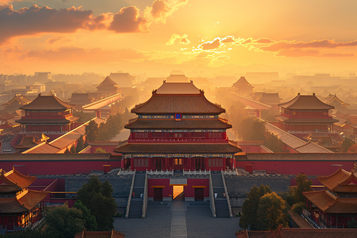
•Morning: Head to the Forbidden City, the former imperial palace of the Ming and Qing dynasties. Explore its magnificent palaces, halls, and gardens, and learn about the imperial history of China.
•Afternoon: Visit Jingshan Park, located right behind the Forbidden City. Climb up to the top of the hill to get a panoramic view of the Forbidden City and the entire Beijing cityscape.
•Evening: Have dinner in a hutong area. You can choose to take a rickshaw ride through the narrow alleys of the hutongs, experiencing the unique local lifestyle.
Day 3: Beijing - Xi'an
•Morning: Take a high - speed train from Beijing West Station to Xi'an North Station. The journey takes about 4.5 hours, during which you can enjoy the scenery along the way.
•Afternoon: Upon arrival in Xi'an, the local tour guide will meet you at the station and transfer you to the hotel. After check - in, visit the ancient City Wall of Xi'an. You can rent a bicycle and cycle around the wall to feel the ancient atmosphere of the city.
•Evening: Have dinner at a local restaurant in the Muslim Quarter, trying famous Xi'an delicacies such as roujiamo (Chinese hamburger), yangrou paomo (pita bread soaked in lamb soup), and liangpi (cold noodles).
Day 4: Xi'an
•Morning: Visit the Terracotta Army, one of the most famous archaeological discoveries in the world. Marvel at the thousands of life - sized clay warriors and horses that were buried with Emperor Qin Shi Huang over 2,000 years ago.
•Afternoon: Go to the Shaanxi History Museum, which houses a vast collection of artifacts that showcase the long history and rich culture of Shaanxi Province.
•Evening: Enjoy the light show and music fountain performance at the Big Wild Goose Pagoda Square. Then, have dinner at a nearby restaurant.
Day 5: Departure from Xi'an
•Morning: Have a free morning to explore the local area around your hotel or do some last - minute shopping.
•Afternoon: Check out of the hotel and be transferred to Xi'an Xianyang International Airport for your flight back home or to your next destination.
III. Attraction Introductions
1. Tiananmen Square (Beijing)
Tiananmen Square is a symbol of modern China. It has witnessed many important historical events. The Monument to the People's Heroes commemorates the martyrs who sacrificed their lives for the Chinese revolution. The Great Hall of the People is where important national meetings and events are held, and the National Museum of China houses a large number of precious historical relics, providing a comprehensive view of Chinese history from ancient times to the present.
2. The Forbidden City (Beijing)
Also known as the Palace Museum, the Forbidden City is a masterpiece of Chinese architecture. It was built in the 14th century and served as the imperial palace for 24 emperors. With over 9,000 rooms, it is a vast complex of palaces, halls, and gardens. The Forbidden City showcases the exquisite craftsmanship of ancient Chinese architecture, as well as a large collection of imperial treasures, including imperial robes, jade carvings, and porcelain.
3. Jingshan Park (Beijing)
Jingshan Park is a historical park with a long history. It was once an imperial garden in the Ming and Qing dynasties. The hill in the park, also known as Prospect Hill, offers a great vantage point to overlook the Forbidden City and the central axis of Beijing. There are also several pavilions on the hill, where you can enjoy the beautiful scenery and relax.
4. The City Wall of Xi'an (Xi'an)
The City Wall of Xi'an is one of the largest and best - preserved ancient city walls in China. It was built in the 14th century during the Ming Dynasty. The wall is about 14 kilometers long, 12 meters high, and 15 - 18 meters wide at the top. Cycling around the wall is a popular activity, allowing you to experience the ancient city's layout and enjoy the view of the city inside and outside the wall.
5. The Terracotta Army (Xi'an)
The Terracotta Army is a collection of life - sized clay sculptures that were buried with Emperor Qin Shi Huang to protect him in the afterlife. Discovered in 1974, it consists of thousands of soldiers, horses, chariots, and weapons. Each warrior has unique facial features, hairstyles, and clothing, demonstrating the high - level craftsmanship of the Qin Dynasty. It is a must - visit attraction for anyone interested in Chinese history and archaeology.
6. Shaanxi History Museum (Xi'an)
The Shaanxi History Museum is often referred to as the "pearl of ancient Chinese history." It houses more than 370,000 cultural relics, ranging from simple stone tools used by primitive humans to precious artworks from various dynasties. The museum's collection provides a comprehensive overview of the development of Chinese civilization in the Shaanxi region, which was the political, economic, and cultural center of China for many dynasties.
7. Big Wild Goose Pagoda (Xi'an)
The Big Wild Goose Pagoda is a famous Buddhist pagoda built in the 7th century. It was originally constructed to store Buddhist scriptures brought back from India by the famous monk Xuanzang. The pagoda is a symbol of the ancient Silk Road and an important religious and cultural site in Xi'an. The square in front of the pagoda features a large music fountain, which offers spectacular shows in the evenings.
Coupon xxxxxxxx has been successfully claimed
Coupon xxxxxxxx repeated collection
Failed to receive coupon xxxxxxx
 USD
USD 
 Lv.1
Lv.1 
Reviews
0%
0%
0%
0%
0%
Share your thoughts with other customers
Write a Review